FRAU WOHLSTAND.
/

WAS MACHT DEIN GELD EIGENTLICH, WÄHREND DU SCHLÄFST?

Ann Kathrin

Vielleicht liegt es auf einem Konto. Vielleicht steckt ein Teil in ETFs, Immobilien, Aktien oder irgendwo dazwischen. Vielleicht denkst du auch schon länger: Mein Geld müsste mehr für mich tun.

Und genau da kam Copy Trading bei mir ins Spiel.

Falls du keine Ahnung von Trading hast: perfekt. Ich fange wirklich ganz vorne an.

2.500 € → 5.007 €knapp sechs Monate
Der Gedanke dahinter

Wir lernen ziemlich früh, dass wir arbeiten müssen, um Geld zu verdienen. Spätestens beim ersten Gehaltsscheck sitzt dieser Gedanke: Für Geld muss man arbeiten.

Was mir sehr lange niemand erklärt hat: Was macht dieses Geld, wenn es erst einmal da ist?

Arbeiten. Geld verdienen. Einen Teil zurücklegen. Vielleicht investieren. Und wenn man vernünftig ist, freut man sich darüber, dass irgendwann mehr da ist als vorher.

Mich hat irgendwann eine andere Frage nicht mehr losgelassen:

Ann Kathrin Daum
Was macht dieses Geld heute für mich?

Ich wollte gar nicht wissen, was aus irgendeinem Betrag vielleicht in 20 Jahren werden könnte. Mich hat viel mehr interessiert, was dieses Geld heute macht. Also wirklich heute. Während ich schlafe. Während wir essen gehen. Während ich mit den Hunden unterwegs bin. Während ich überhaupt nichts damit zu tun habe.

Und da war für mich klar: Genau das ist der Punkt. Ich muss Trading nicht zu meinem nächsten Beruf machen. Ich muss nicht jeden Tag irgendwelche Charts lesen. Ich muss verstehen, was mit meinem Geld passiert, wo es liegt und welches Risiko ich eingehe.

Okay. Ganz von vorne.

WAS IST COPY TRADING?

Ich hatte keine Lust, erst sechs Monate Trading zu lernen, Charts anzustarren und mir irgendeine neue Leidenschaft für Kerzenformationen anzutrainieren.

Ein Traderteam trifft die Handelsentscheidungen. Diese Trades werden automatisch auf dein eigenes Brokerage-Konto übertragen.

Du sitzt also nicht morgens vor einem Chart und überlegst, ob du Gold kaufen oder den Euro verkaufen sollst. Du musst nicht lernen, wie man Einstiege sucht, Stop-Loss-Marken setzt oder Märkte interpretiert.

Und trotzdem liegt dein Geld nicht irgendwo bei einem Trader. Das Konto läuft auf deinen Namen. Du kannst sehen, was auf diesem Konto passiert.

01
Du eröffnest ein eigenes Brokerage-Konto.

Auf deinen Namen und mit deinem eigenen Kapital.

02
Das Traderteam handelt nach seiner Strategie.

Es entscheidet, wann eine Marktposition eröffnet oder beendet wird.

03
Die Trades werden auf dein Konto übertragen.

Kontostand, Trades und Entwicklung kannst du selbst einsehen.

Für mich war genau das der Punkt. Ich hatte überhaupt keine Lust, daraus meinen nächsten Vollzeitjob zu machen. Mich hat interessiert, wie ich mein Geld auf diese Weise arbeiten lassen kann, ohne selbst den ganzen Tag vor irgendwelchen Charts zu sitzen.

Ann Kathrin
Der Punkt

MEIN GELD MUSS NICHT PAUSE MACHEN, NUR WEIL ICH ES TUE.

Ich möchte mein Leben nicht um einen Job herum organisieren. Ich möchte Zeit haben. Für meinen Mann Sascha. Für unseren Teenager. Für Charly, Hope, Juna und Luke – unsere Bande auf vier Pfoten. Für Reisen, Freunde, spontane Tage und genauso für Nachmittage, an denen einfach mal gar nichts passiert.

Und irgendwann wurde dieser Gedanke für mich viel größer als Trading.

Was passiert, wenn ich morgen nicht mehr arbeiten kann? Oder irgendwann einfach beschließe, dass ich es nicht mehr will?

Woher kommt dann mein Geld? Wovon lebe ich dann? Und wie viel Freiheit habe ich wirklich, wenn mein Einkommen am Ende doch immer wieder davon abhängt, dass ich selbst funktioniere?

Genau da hat sich mein Blick auf Geld verändert. Ich wollte mir Stück für Stück etwas aufbauen, das weiterläuft, auch wenn ich gerade nichts dafür tue.

Und dann kommt dieser Gedanke, den man sich kaum laut zu sagen traut: Darf ich das überhaupt denken? Nicht mehr arbeiten wollen – obwohl ich noch könnte?

Unsere eigene Entscheidung

WIR HABEN MIT 25.000 EURO ANGEFANGEN.

Über die Zeit haben wir immer wieder zusätzliches Kapital eingezahlt und unseren Einsatz Stück für Stück erhöht.

HEUTE SIND WIR MIT MEHR ALS 200.000 € INVESTIERT.

Und nur damit du weißt, worüber ich hier rede: Das ist unser eigenes Geld.

Ob das bei dir irgendwann 1.000, 5.000 oder 25.000 Euro sind, ist am Ende deine Sache. Du solltest wissen, wo dein Geld liegt, was damit passiert, welches Risiko du eingehst und ob diese Art zu investieren überhaupt zu dir passt.

Bei uns kam irgendwann noch eine andere Frage dazu: Was passiert, wenn wir die Gewinne einfach drinlassen und immer wieder neu einsetzen?

Für unsere Kinder haben wir genau dafür eigene Konten angelegt. Bei diesen Konten wollte ich sehen, was Reinvestieren über mehrere Monate mit einem überschaubaren Startbetrag macht.

Die Entwicklung war bei allen Konten identisch. Deshalb zeige ich dir hier einfach eines davon.

2.500 EURO.
KNAPP SECHS MONATE.
5.007 EURO.

Die Gewinne blieben im Konto und arbeiteten bei den folgenden Trades mit.

2.500 €
5.007 €
knapp sechs Monate · Gewinne wurden erneut eingesetzt
97geschlossene Trades
90davon im Gewinn
92,8 %Trefferquote

Die längste Gewinnserie lag bei 17 Trades. Im ausgewerteten Zeitraum gab es nie mehr als einen Verlusttrade hintereinander.

Der größte Gewinn mit einem einzelnen Trade lag bei 181,17 Euro. Der größte Verlusttrade bei 55,39 Euro.

Natürlich kann der nächste Monat komplett anders aussehen. Das hier ist Vergangenheit. Für mich zeigen diese Zahlen vor allem, was Reinvestieren über mehrere Monate machen kann.

Die bisherigen Monate

DAS HIER SIND DIE MONATE, DIE WIR BISHER GESEHEN HABEN.

Die bisherigen Monatsergebnisse lagen bei mindestens 8 Prozent. Die meisten Monate lagen zwischen 12 und 15 Prozent. Der bisher stärkste Monat lag bei 18 Prozent.

Natürlich weiß niemand, wie der nächste Monat aussieht. Das hier ist das, worauf ich heute schauen kann.

8 %
niedrigster bisheriger Monat
12–15 %
da lagen die meisten Monate
18 %
stärkster bisheriger Monat
Jetzt wird es konkreter

WAS WÜRDEN 12–15 % MIT DEINEM GELD MACHEN?

Mit Prozentzahlen allein kann ich wenig anfangen. Interessant wird es für mich erst, wenn ich sehe, was sie bei echten Beträgen bedeuten.

1.000 €
120–150 €rechnerisch bei 12–15 %
5.000 €
600–750 €rechnerisch bei 12–15 %
10.000 €
1.200–1.500 €rechnerisch bei 12–15 %
25.000 €
3.000–3.750 €rechnerisch bei 12–15 %
50.000 €→ 6.000–7.500 €
100.000 €→ 12.000–15.000 €

Rein rechnerische Übertragung von 12–15 Prozent. Keine Renditezusage. Zukünftige Ergebnisse können niedriger ausfallen oder negativ sein.

Spätestens da habe ich mich gefragt, warum Geld überhaupt irgendwo herumliegen sollte, wenn ich ihm auch einen Job geben kann.

Rechne es mit deinem eigenen Betrag durch →
Okay, aber wo kommen solche Zahlen her?

DENN 12 ODER 15 PROZENT IM MONAT FALLEN NICHT VOM HIMMEL.

Und genau da kommt der Hebel ins Spiel. Beim Forex-Handel wird nicht ausschließlich mit dem Betrag gearbeitet, der als eigenes Kapital auf dem Konto liegt.

Schauen wir uns das einmal mit 1.000 Euro an.

daraus entsteht ein Handelsvolumen von 24.000 € bei 1.000 € eigenem Kapital · Hebel 24×

Was macht der Hebel eigentlich?

Das Wort klingt komplizierter, als es ist.

Bei uns wird mit einem 24er-Hebel gearbeitet. Vereinfacht gesagt bedeutet das: Aus 1.000 Euro eigenem Kapital entsteht ein Handelsvolumen von 24.000 Euro.

Und genau hier liegt der Grund, warum überhaupt zweistellige Ergebnisse möglich sind.

Der Trader muss dafür keine 20 oder 30 Prozent erwirtschaften. Schon kleine Ergebnisse der Strategie werden durch den Hebel entsprechend verstärkt.

Ein einfaches Beispiel:

1 % Trading-Performance × 24 = 24 %

Erwirtschaftet die Strategie ungehebelt 1 %, entspricht das mit dem 24er-Hebel rechnerisch 24 %.

Bei 1,5 % wären es entsprechend 36 %.

So entstehen die Größenordnungen, über die wir hier sprechen. Es geht also nicht darum, mit einzelnen Trades riesige Gewinne zu erzielen. Viele kleine Ergebnisse ergeben am Ende das Ergebnis des Monats.

Natürlich funktioniert der Hebel auch in die andere Richtung: Verluste werden ebenfalls verstärkt. In der bisherigen Historie gab es allerdings nie mehr als zwei Verlusttrades hintereinander. Das ist keine Garantie dafür, dass das auch in Zukunft so bleibt – zeigt aber, wie die Strategie bislang gearbeitet hat.

Und genau deshalb gehört beides zusammen: Der Hebel macht diese Ergebnisse möglich. Er ist aber auch einer der Gründe, warum Trading immer mit Risiko verbunden bleibt.

Was mich wirklich interessiert

ICH GLAUBE ZAHLEN NICHT EINFACH, NUR WEIL SIE GUT AUSSEHEN.

Bei Zahlen bin ich inzwischen ziemlich misstrauisch. Mich interessiert nicht nur, was da steht. Ich will wissen, wie es zustande kommt.

Wo liegt mein Geld? Wer kann darauf zugreifen? Was passiert, wenn die Strategie Verlust macht? Wie oft wird gehandelt? Wann komme ich wieder an mein Kapital? Und wer verdient woran?

Das sind die Sachen, die ich heute wissen will, bevor ich irgendwo Geld reinstecke.

Ann Kathrin Daum

Wo liegt mein Geld?

Auf deinem eigenen Brokerage-Konto in deinem Namen. Dort kannst du Kontostand, Trades und Entwicklung selbst einsehen.

Wie oft wird gehandelt?

Bei Gold/USD sind ein bis zwei Trades am Tag möglich. Bei EUR/USD maximal einer am Tag. Es gibt auch Wochen, in denen dort nur ein Trade entsteht.

Was passiert, wenn es ins Minus geht?

Erreicht die Strategie die festgelegte Grenze von fünf Prozent, wird sie liquidiert. Dabei kann das eingesetzte Kapital vollständig verloren gehen. Auch bereits erzielte und weiter eingesetzte Gewinne können betroffen sein.

Wie lange ist mein Geld gebunden?

Das eingesetzte Kapital ist zunächst 30 Tage gebunden. Danach kann es grundsätzlich wieder ausgezahlt werden, sofern zwischenzeitlich kein Reinvest erfolgt.

Was ist mit meinen Gewinnen?

Gewinne können ausgezahlt werden, solange sie nicht erneut eingesetzt wurden. Bei einer Bankauszahlung gilt ein Mindestbetrag von 500 Euro, bei einer Krypto-Auszahlung 10 Euro.

Kann ich Gewinne erneut einsetzen?

Ja. Möchtest du, dass der Gewinn bei den nächsten Trades mitarbeitet, kannst du ihn ab einem Dollar erneut einsetzen. Mit jedem Reinvest startet die 30-Tage-Frist für dein gesamtes eingesetztes Kapital neu.

Wer ist der Broker?

Der Broker heißt TagMarkets. Dein Tradingkonto wird bei T.M. Financials Ltd. geführt, einem auf Mauritius regulierten Investment Dealer.

Mauritius hat einen eigenen gesetzlichen Rahmen für Finanzdienstleister. Zuständig ist die Financial Services Commission (FSC), die Finanzunternehmen beaufsichtigt und entsprechende Lizenzen vergibt. Es handelt sich also um einen regulierten Broker – lediglich unter einer anderen Aufsicht als innerhalb der EU.

Und was mir persönlich wichtig ist:

Dein Tradingkonto läuft auf deinen Namen. Ich habe keinen Zugriff auf dein Guthaben und kann weder Einzahlungen noch Auszahlungen für dich veranlassen. Die Kontrolle über dein Konto bleibt bei dir.

Zusätzlich gibt TagMarkets an, über eine Client Funds Insurance zu verfügen. Diese greift im Fall einer Insolvenz von T.M. Financials Ltd. und umfasst laut Anbieter sowohl verfügbares Guthaben als auch offene CFD-Positionen.

Natürlich schützt eine solche Absicherung nicht vor Verlusten, die beim Trading entstehen können. Aber sie ist eine zusätzliche Absicherung rund um den Broker selbst.

Wer verdient woran?

NEHMEN WIR 1.000 EURO GEWINN.

Wenn auf deinem Konto Gewinn entsteht, bleiben 70 Prozent davon bei dir.

700 €bleiben bei dir
50 €gehen an das Traderteam
250 € fließen in die Betreuung, das Partnerprogramm und alles, was im Hintergrund dafür sorgt, dass Menschen diesen Weg kennenlernen und gut begleitet werden

Heißt: Es wird erst dann etwas verteilt, wenn auf deinem Konto überhaupt Gewinn entstanden ist. Für deine Anmeldung oder Einzahlung gibt es keine Vergütung.

Gehört genauso dazu

JA. DU KANNST AUCH GELD VERLIEREN.

Ich würde dir nie erzählen, dass Trading risikofrei ist. Ist es nicht.

Verlusttrades gehören dazu. Der Hebel verstärkt beide Richtungen. Vergangene Ergebnisse garantieren keine zukünftigen Ergebnisse und das eingesetzte Kapital kann vollständig verloren gehen.

Deshalb schaue ich nicht nur darauf, was möglich ist. Ich will genauso wissen, was im schlechtesten Fall passiert, wo die Grenze liegt und ob ich jederzeit nachvollziehen kann, was mit meinem Geld passiert.

Bevor du weiterliest

Menschen. Erfahrungen. Ergebnisse.

Zahlen habe ich dir jetzt genug gezeigt. Hier erzählen drei Menschen, wie es bei ihnen wirklich gelaufen ist.

Für mich persönlich ist das tatsächlich ein Stück weit lebensverändernd.

Es sind noch keine riesigen Summen. Aber wenn ich sehe, was sich in noch nicht einmal zehn Monaten aus meinen ursprünglichen 600 Dollar entwickelt hat, obwohl ich zwischendurch bereits Geld herausgenommen habe, ist das für mich enorm.

Manuela ManuelaStart Oktober 2025 · 600 Dollar
Ich kann mir zwischendurch etwas gönnen, ohne an mein normales Einkommen zu gehen.

Ich habe insgesamt 2.690,10 US-Dollar eingezahlt und mir bisher 4.094,90 US-Dollar auszahlen lassen. Damit habe ich bereits 1.404,80 US-Dollar mehr ausgezahlt, als ich investiert hatte.

Rihab Rihab2.690,10 $ eingezahlt · 4.094,90 $ ausgezahlt
Zwei meiner drei Strategien haben sich in ein paar Monaten verdoppelt.

Mir ist klar, dass Gewinne nicht garantiert sind. Mein Plan ist, mir zuerst meinen eingesetzten Betrag wieder auszuzahlen und anschließend mit den Gewinnen weiterzumachen.

Eli EliStart mit 250 Dollar
Alle Erfahrungen lesen →

Persönliche Einzelfälle, keine typischen oder zu erwartenden Ergebnisse.

Emma
Noch eine Frage im Kopf?

DANN FRAG EMMA.

Risiko, Auszahlungen, Gebühren oder einfach nochmal ganz von vorne – Emma bringt dich direkt zu der Antwort, die du gerade brauchst.

Ruhe im Bauch

DU WILLST DAS ERST MAL WIRKLICH VERSTEHEN?
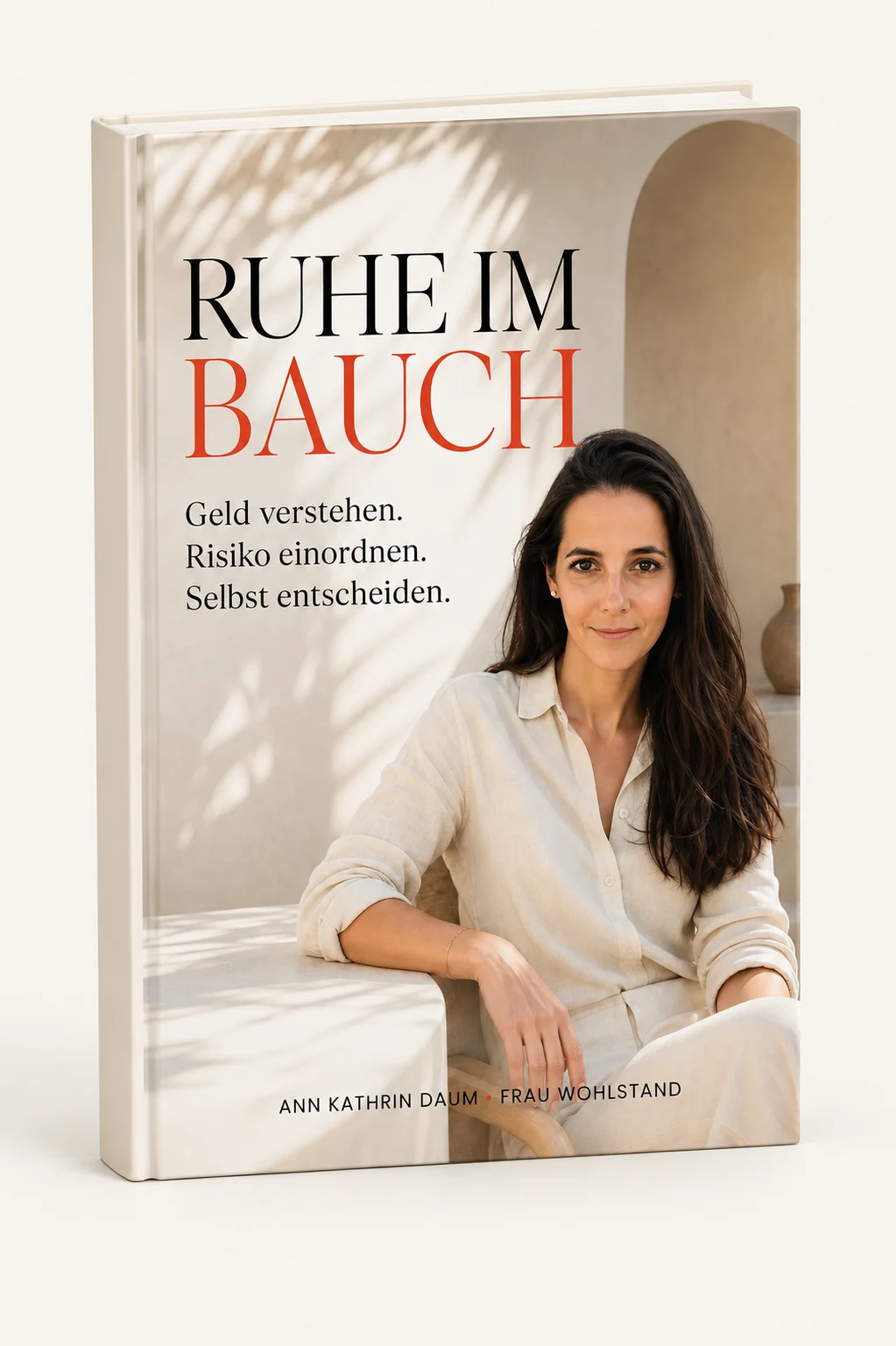
Ruhe im Bauch

Vielleicht bist du an diesem Punkt neugierig geworden und merkst gleichzeitig: Bevor ich irgendwo Geld einsetze, will ich erst mal verstehen, worüber wir hier überhaupt reden.

Genau dafür habe ich „Ruhe im Bauch“ geschrieben.

Ich hätte dieses Buch selbst viel früher gebraucht. Weil es bei Geld für mich lange nur zwei Zustände gab: Entweder ich hatte keine Ahnung, oder irgendjemand erklärte mir etwas in einer Sprache, bei der ich nach drei Sätzen ausgestiegen bin.

In „Ruhe im Bauch“ fange ich deshalb viel früher an. Bei der Frage, was mit deinem Geld passiert, wenn du gar nichts damit machst. Warum Nichtstun eben auch eine Entscheidung ist. Woher diese verdammte Angst vor Investieren kommt. Wie Geld, Inflation und Zinseszins überhaupt funktionieren. Was Banken mit deinem Geld machen. Und irgendwann natürlich auch, wie Forex, Hebel, Broker und Copy Trading zusammenhängen.

Aber mir geht es in diesem Buch nicht darum, dass du danach zehn neue Fachbegriffe kennst. Ich will, dass du Geld endlich besser verstehst. Dass du Zahlen einordnen kannst. Dass du erkennst, wenn dir jemand Quatsch erzählt.

Ich will, dass du irgendwann selbst entscheiden kannst, was zu dir passt, ohne dieses Gefühl im Bauch, dass alle anderen mehr wissen als du.

„Dieses Buch ist genau das – das Gespräch, das ich mir damals gewünscht hätte.“

„Ruhe im Bauch“ lesen →
Oder erst mal mit deinen eigenen Zahlen rechnen →
Ann Kathrin
Und jetzt geht es um dein Geld.

WAS KÖNNTE DEIN GELD FÜR DICH TUN?

Du kennst jetzt die Zahlen. Du weißt, wie das Konto funktioniert, wo dein Geld liegt, wie Gewinne verteilt werden und welches Risiko dazugehört. Und du weißt, mit welchem Kapital wir selbst heute dabei sind.

Vielleicht hast du längst eine Summe im Kopf.

1.000 Euro. 5.000. 10.000. Vielleicht deutlich mehr.

Vielleicht aber auch weniger.

Der Einstieg ist bereits ab 250 Dollar möglich.

Und das finde ich wichtig zu sagen. Denn viele schieben das Thema Geldanlage jahrelang vor sich her, weil sie glauben, sie müssten erst einen größeren Betrag angespart haben, bevor es überhaupt Sinn ergibt, anzufangen.

Musst du nicht.

Du kannst mit einer Summe starten, die sich für dich gut anfühlt. Erst einmal sehen, wie das Ganze funktioniert. Erfahrungen sammeln. Und später selbst entscheiden, ob du dein Kapital erhöhen möchtest.

Wenn du jetzt wissen willst, wie der Einstieg mit deinem eigenen Geld konkret aussieht, brauchst du keine weitere Beispielrechnung.

Dann schau dir an, wie der Start funktioniert.

Und falls du irgendwann merkst, dass du über Copy Trading sowieso ständig mit anderen redest:

Dafür gibt es auch ein Partnerprogramm. Das kannst du dir anschauen, wenn es für dich relevant wird.
2.500 € wurden 5.007 € · knapp sechs Monate

Ich will sehen, wie ich starten kann →

WHAT IS YOUR MONEY ACTUALLY DOING WHILE YOU SLEEP?

Ann Kathrin

Maybe it is sitting in a bank account. Maybe some of it is in ETFs, property, stocks or somewhere in between. Maybe you have been thinking for a while: My money should be doing more for me.

That is where Copy Trading came into the picture for me.

If you know absolutely nothing about trading: perfect. I am starting right at the beginning.

€2,500 → €5,007just under six months
The thought behind it

We learn pretty early in life that we have to work to earn money. By the time the first salary lands in our account, that idea is firmly planted: money comes from work.

What nobody explained to me for a very long time was: what does that money do once it is there?

Work. Earn money. Put some aside. Maybe invest. And if you are sensible, you are pleased when there is eventually a little more than there was before.

At some point another question would not leave me alone:

Ann Kathrin Daum
What is this money doing for me today?

I was never particularly interested in what some amount might perhaps become in 20 years. I wanted to know what the money was doing today. Literally today. While I sleep. While we are out for dinner. While I am walking the dogs. While I am doing absolutely nothing with it.

And that was the point for me. Trading did not have to become my next profession. I did not want to spend every day reading charts. I wanted to understand what was happening with my money, where it was held and what risk I was taking.

Okay. Right from the beginning.

WHAT IS COPY TRADING?

I had absolutely no desire to spend six months learning to trade, staring at charts or developing a sudden passion for candlestick formations.

A team of traders makes the trading decisions. Those trades are then automatically copied to your own brokerage account.

So you are not sitting in front of a chart in the morning wondering whether to buy gold or sell the euro. You do not have to learn how to find entries, place stop losses or interpret markets.

And your money is not sitting somewhere in a trader's account either. The brokerage account is in your own name. You can see what is happening in it.

01
You open your own brokerage account.

In your own name and with your own capital.

02
The trading team trades its strategy.

They decide when to open and when to close a market position.

03
The trades are copied to your account.

You can see your balance, the trades and the account development yourself.

That was exactly the point for me. I had no interest in turning trading into my next full-time job. What interested me was how I could put my money to work this way without sitting in front of charts all day myself.

The real point

MY MONEY DOES NOT HAVE TO STOP WORKING JUST BECAUSE I DO.

I do not want to organise my life around a job. I want time. For my husband Sascha. For our teenager. For Hope and Charly, our dogs. For travelling, friends, spontaneous days and afternoons where absolutely nothing happens.

And at some point that thought became much bigger than trading for me.

What happens if I cannot work tomorrow? Or if one day I simply decide that I do not want to anymore?

Where does my money come from then? What do I live on? And how much freedom do I really have if my income still depends on me personally having to function?

That is where the way I looked at money changed. I wanted to build something, step by step, that could continue even when I was not actively working for it.

For me, there is a much bigger question behind all of this: How much of my income still depends directly on my own time?

Ann Kathrin
What we chose to do ourselves

WE STARTED WITH €25,000.

Over time we added more capital and increased our investment step by step.

TODAY WE HAVE MORE THAN €200,000 INVESTED.

And just so you know what I am talking about here: this is our own money.

Whether you are thinking about €1,000, €5,000 or €25,000 is entirely your decision. You should understand where your money is held, what happens to it, what risk you are taking and whether this kind of investing actually suits you.

At some point we had another question: what happens if we simply leave the profits in the account and keep reinvesting them?

That is exactly why we opened separate accounts for our children. I wanted to see what reinvesting could do over several months with a clear, manageable starting amount.

The development was identical across all of the accounts. So I am simply showing you one of them here.

€2,500.
JUST UNDER SIX MONTHS.
€5,007.

The profits stayed in the account and were used again in the trades that followed.

€2,500
€5,007
just under six months · profits reinvested
97closed trades
90winning trades
92.8%win rate

The longest winning streak was 17 trades. During the period evaluated, there were never more than one losing trade in a row.

The largest profit on a single trade was €181.17. The largest losing trade was €55.39.

The next month can of course look completely different. These are past results. For me, these numbers mainly show what reinvesting can do over several months.

The months so far

THESE ARE THE MONTHS WE HAVE SEEN SO FAR.

Monthly results so far have been at least 8%. Most months have been between 12% and 15%. The strongest month so far was 18%.

Nobody knows what the next month will look like. This is simply the development I can look at today.

8%
lowest month so far
12–15%
where most months have landed
18%
strongest month so far
Now it gets more concrete

WHAT WOULD 12–15% MEAN FOR YOUR MONEY?

Percentages alone do not tell me much. It only becomes interesting for me when I see what they mean in actual numbers.

€1,000
€120–150calculated at 12–15%
€5,000
€600–750calculated at 12–15%
€10,000
€1,200–1,500calculated at 12–15%
€25,000
€3,000–3,750calculated at 12–15%
€50,000→ €6,000–7,500
€100,000→ €12,000–15,000

Purely mathematical illustration based on 12–15%. This is not a return promise. Future results may be lower or negative.

That was the point where I started wondering why money should simply sit somewhere if I could give it a job instead.

Work it out with your own amount →
Okay, but where do numbers like these come from?

BECAUSE 12 OR 15 PERCENT A MONTH DOES NOT FALL FROM THE SKY.

This is where leverage comes into play. In Forex trading, the amount being traded is not limited to the capital sitting in the account itself.

Let us look at an example with €1,000.

creating a total trading volume of €24,000 with €1,000 of your own capital · 24× leverage

What does leverage actually do?

The word sounds more complicated than it is.

We work with 24× leverage. Put simply, that means: €1,000 of your own capital creates a trading volume of €24,000.

And that is exactly why double-digit results are possible at all.

The trader does not have to produce 20 or 30 percent for that. Even small results from the strategy are amplified accordingly by the leverage.

A simple example:

1 % trading performance × 24 = 24 %

If the strategy produces 1 % unleveraged, that corresponds mathematically to 24 % with 24× leverage.

At 1.5 % it would be 36 % accordingly.

That is how the orders of magnitude we are talking about here come about. So it is not about making huge profits on individual trades. Many small results add up to the result of the month.

Of course leverage also works in the other direction: losses are amplified as well. In the history so far, however, there were never more than two losing trades in a row. That is no guarantee that it will stay that way in future – but it shows how the strategy has worked so far.

And that is exactly why the two belong together: leverage makes these results possible. But it is also one of the reasons why trading always carries risk.

What I actually want to know

I DO NOT BELIEVE NUMBERS JUST BECAUSE THEY LOOK GOOD.

I have become pretty sceptical when it comes to numbers. I do not only want to know what they say. I want to know how they came about.

Where is my money held? Who can access it? What happens if the strategy loses money? How often are trades placed? When can I access my capital again? And who earns what?

These are the things I want to know today before I put money anywhere.

Ann Kathrin Daum

Where is my money held?

In your own brokerage account in your own name. You can see the balance, trades and account development yourself.

How often are trades placed?

With Gold/USD, one or two trades a day are possible. With EUR/USD, no more than one per day. There are also weeks where only a single trade is placed.

What happens if the strategy goes into loss?

If the strategy reaches the defined 5% boundary, it is liquidated. The capital deployed can be lost completely. Profits that have already been earned and reinvested can also be affected.

How long is my money locked in?

The invested capital is initially committed for 30 days. After that it can generally be withdrawn, provided no reinvestment has taken place in the meantime.

What about my profits?

Profits can be withdrawn as long as they have not been reinvested. The minimum bank withdrawal is €500, while the minimum crypto withdrawal is €10.

Can I reinvest profits?

Yes. If you want the profit to work in future trades, it can be reinvested from as little as one dollar. Every reinvestment restarts the 30-day period for your entire invested capital.

Who is the broker?

The broker is TagMarkets. Your trading account is held with T.M. Financials Ltd., an investment dealer regulated in Mauritius.

Mauritius has its own legal framework for financial service providers. The responsible authority is the Financial Services Commission (FSC), which supervises financial companies and issues the corresponding licences. So this is a regulated broker – simply under a different authority than within the EU.

And what matters to me personally:

Your trading account is in your name. I have no access to your balance and I can arrange neither deposits nor withdrawals on your behalf. Control of your account stays with you.

TagMarkets also states that it holds a Client Funds Insurance. According to the provider, this applies in the event of insolvency of T.M. Financials Ltd. and covers both available balance and open CFD positions.

Of course, cover of this kind does not protect against losses that can arise from trading itself. But it is an additional safeguard around the broker.

Who earns what?

LET'S TAKE €1,000 IN PROFIT.

If your account generates profit, 70% of it remains with you.

€700stays with you
€50goes to the trading team
€250 goes towards support, the partner programme and the work happening in the background to introduce and support people using the system

In other words: nothing is distributed until profit has actually been generated in your account. There is no payment for your registration or deposit.

This belongs on the table too

YES. YOU CAN ALSO LOSE MONEY.

I would never tell you that trading is risk-free. It is not.

Losing trades are part of it. Leverage amplifies both directions. Past results do not guarantee future results and the capital invested can be lost completely.

That is why I do not only look at what is possible. I want to know what can happen in the worst case, where the limit is and whether I can always understand what is happening with my money.

Before you read on

People. Experiences. Results.

I have shown you enough figures by now. Here are three people telling you how it actually went for them.

For me personally, this really is life-changing in a small way.

These are not huge sums yet. But when I see what has come of my original 600 dollars in less than ten months, even though I have already taken money out along the way, that is enormous to me.

Manuela ManuelaStarted October 2025 · 600 dollars
I can treat myself now and then without touching my normal income.

I have paid in 2,690.10 US dollars in total and have had 4,094.90 US dollars paid out so far. That is 1,404.80 US dollars more than I had invested.

Rihab Rihab2,690.10 $ paid in · 4,094.90 $ paid out
Two of my three strategies doubled within a few months.

I know that profits are not guaranteed. My plan is to pay out my original stake first and carry on with the profits after that.

Eli EliStarted with 250 dollars
Read all experiences →

Individual experiences, not typical or expected results.

Emma
Still have a question?

THEN ASK EMMA.

Risk, withdrawals, fees or simply starting from the beginning again – Emma takes you straight to the answer you need right now.

Ruhe im Bauch

YOU WANT TO REALLY UNDERSTAND IT FIRST?

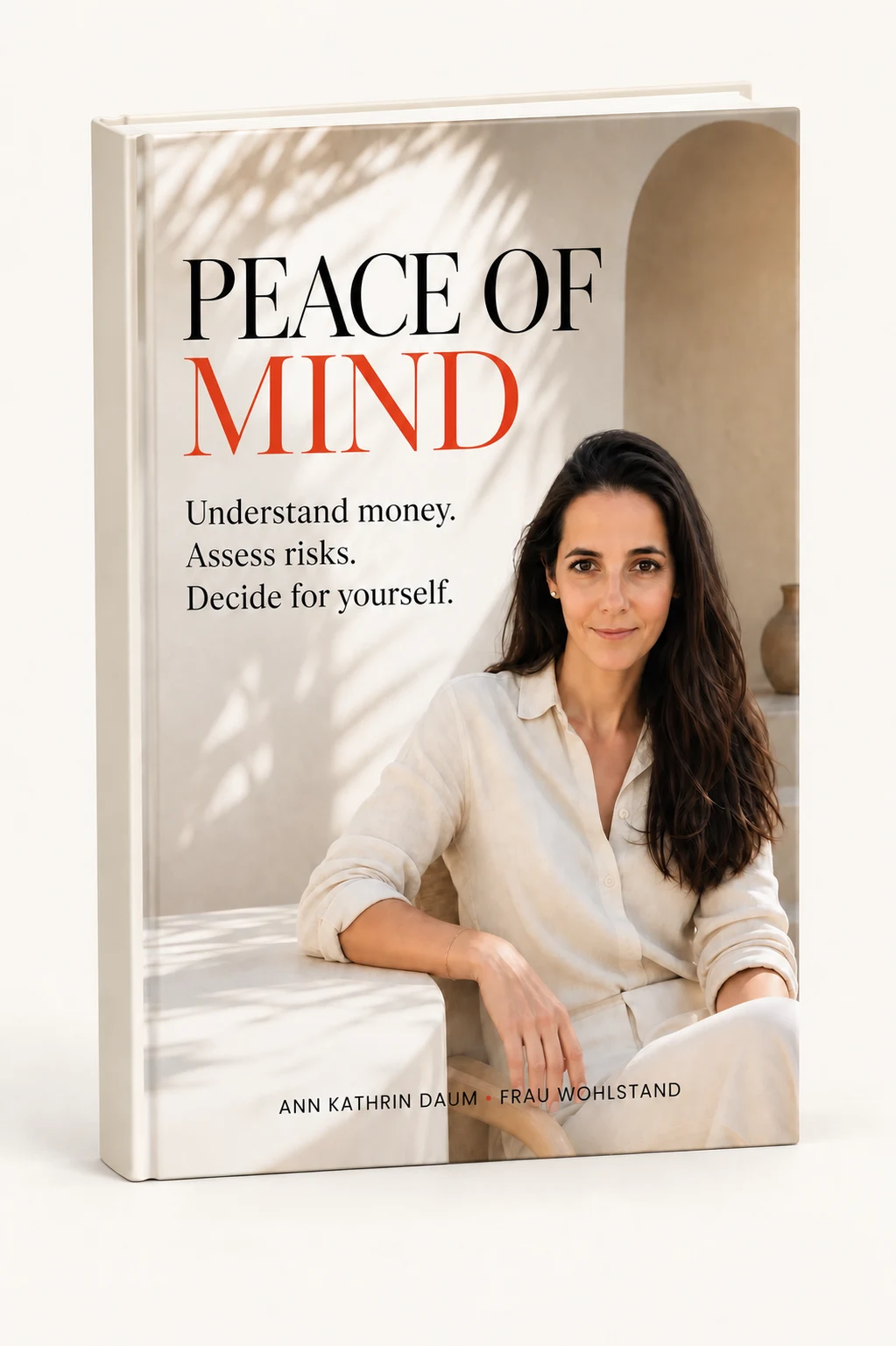
Peace of Mind – Buch

Maybe you have reached this point and you are curious, but another thought is there too: before I put money anywhere, I want to understand what we are actually talking about.

That is exactly why I wrote “Ruhe im Bauch”.

I wish I had had this book much earlier. For a long time, money seemed to come in only two versions: either I had no idea what people were talking about, or somebody explained it in a language that lost me after three sentences.

So “Ruhe im Bauch” starts much earlier. With the question of what happens to your money when you do nothing with it. Why doing nothing is still a decision. Where this damn fear of investing comes from. How money, inflation and compound interest actually work. What banks do with your money. And eventually, of course, how Forex, leverage, brokers and Copy Trading fit together.

I did not write this book so you would finish it knowing ten new technical terms. I want you to understand money better. To be able to put numbers into context. To recognise when someone is talking nonsense.

I want you to be able to make your own decisions eventually, without that feeling in your stomach that everyone else knows more than you do.

“This book is exactly that – the conversation I wish someone had had with me back then.”

Read “Ruhe im Bauch” →
Or start by running your own numbers →
Ann Kathrin
And now it is about your money.

WHAT COULD YOUR MONEY DO FOR YOU?

You know the numbers now. You know how the account works, where your money is held, how profits are distributed and what risk comes with it. And you know how much capital we personally have invested today.

Maybe you already have a number in your head.

€1,000. €5,000. €10,000. Maybe considerably more.

Or maybe less.

You can get started from 250 dollars.

And I think that is worth saying. Because many people put off the whole subject of investing for years, believing they first have to save up a larger amount before it even makes sense to begin.

You don’t have to.

You can start with an amount that feels right to you. See how the whole thing works. Gather your own experience. And decide later whether you want to increase your capital.

If you want to know now what getting started looks like with your own money, another example calculation is not going to tell you much more.

Then take a look at how starting works.

And if you eventually notice that you are talking to other people about Copy Trading all the time anyway:

There is also a partner programme. You can take a look at that if and when it becomes relevant to you.

€2,500 became €5,007 · just under six months

Show me how to get started →